Social Distance and the Concept of Personal Space in Turkey
Explore the concept of social distance and personal space in Turkey. Read our article to increase your awareness and navigate social interactions like a local!
Social Distancing Practices in Turkey
Social distancing practices in Turkey gained greater importance with the COVID-19 pandemic. International students should be mindful to understand and adapt to these practices. Social distance refers to the physical space between individuals, usually set at 1-2 meters. Maintaining this distance is crucial for health, especially in crowded environments.
- On-Campus Practices: At universities, seating arrangements in classrooms are typically organized according to social distancing rules. Instead of sitting next to each other, students are expected to leave empty seats between them.
- Events: Universities organize their events in compliance with social distancing rules and limit the number of participants.
The Concept of Personal Space: Cultural Differences and Experiences in Turkey
In Turkey, warmth and affection are often expressed through physical proximity and touch. This is particularly evident in close friendships and family relationships.
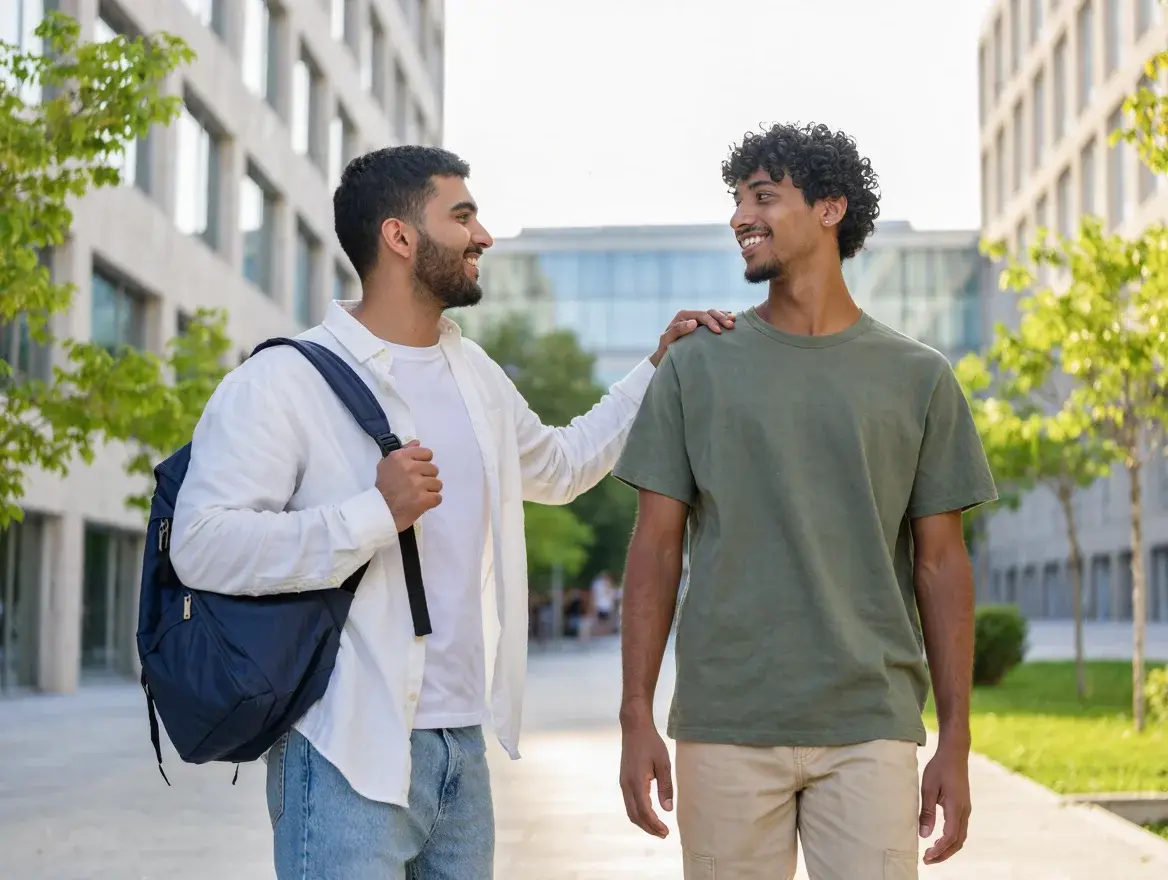
- Greetings: Among close friends and family members, kissing and hugging are common forms of greeting. It’s quite natural for close friends of the same gender to kiss each other on the cheek. Among men, handshakes and a friendly pat on the shoulder are frequently seen.
- Conversation and Communication: When talking with a Turkish person, it’s normal for them to stand physically closer to you and even touch your arm or shoulder during the conversation. This is perceived not as an intrusion, but as a sign of sincerity and trust.
- Public Transport and Crowded Spaces: On public transport like buses and metros, or in crowded venues, people are physically very close to one another. This is accepted as a social norm where personal space is temporarily suspended and needs to be tolerated.
Differences Based on Gender and Age
The perception of social distance also varies according to gender and age.
- Interaction with the Opposite Gender: In interactions with the opposite gender, social distance is generally greater, especially during initial acquaintances and first meetings. Handshakes can vary depending on cultural and personal preferences. Some individuals, adhering to traditional values, may prefer not to shake hands.
- Respect for Elders: Respect for the elderly can also be expressed through physical contact. Kissing an elder’s hand and bringing it to one’s forehead is a profound sign of respect in Turkish culture.
Social Distancing Rules: Their Importance for Students Studying in Turkey
Social distancing rules are important not only for health reasons but also for social interactions. International students studying in Turkey are expected to adhere to these rules. These regulations cover a wide range of situations, from classroom interactions to social events.
- Classes: In the classroom setting, instructors often remind students of social distancing rules and ensure they are followed.
- Libraries and Common Areas: In libraries and common study areas, seating arrangements are set up to comply with social distancing rules.
Discover the Social Dynamics in Turkey!
Turkey is a very attractive country for international students, both for its quality of education and its rich cultural experiences. Young people who choose to study in Turkey will not only achieve academic success but also have a period full of unforgettable memories and experiences. Being mindful of social distance and personal space concepts will positively affect students’ social interactions. If you are considering studying in Turkey, you can take the right steps by considering the information shared in this article.
Frequently Asked Questions
How is the concept of personal space defined in Turkey?
In Turkish culture, personal space is more flexible compared to Western societies. Physical proximity (a touch on the shoulder, a cheek-to-cheek kiss) is considered a sign of warmth and sincerity. The distance is especially smaller within family and close friend circles.
How is personal space maintained on public transport or in crowded places?
In crowded environments, physical distance naturally decreases. However, in Turkish society, this is not usually perceived as an inconvenience. Although people try to give each other space out of respect, it’s not always practical.
What are the personal space boundaries for foreigners in Turkey?
For foreigners, more distance is expected in initial interactions. However, as familiarity grows, physical proximity may also increase. The personal space needs of foreigners are generally respected, but the warm and hospitable nature of Turkish people can sometimes involve closer contact.
How does personal space work in a professional environment?
In workplaces, it varies depending on the level of formality. While a hierarchical distance is maintained in traditional workplaces, more informal relationships can be seen in modern office environments. Nevertheless, friendly physical contact (a pat on the back, a friendly touch) among colleagues is common.
Does personal space in Turkey differ by gender?
Yes, the distance between genders is more pronounced. In more traditional circles, physical contact between opposite genders is more limited, while physical proximity between people of the same gender is more acceptable. In modern urban life, however, these boundaries are more flexible.
Studying in Turkey offers many opportunities and experiences. We hope this article helps you in your decision to choose Turkey. Remember, every new beginning is an adventure!