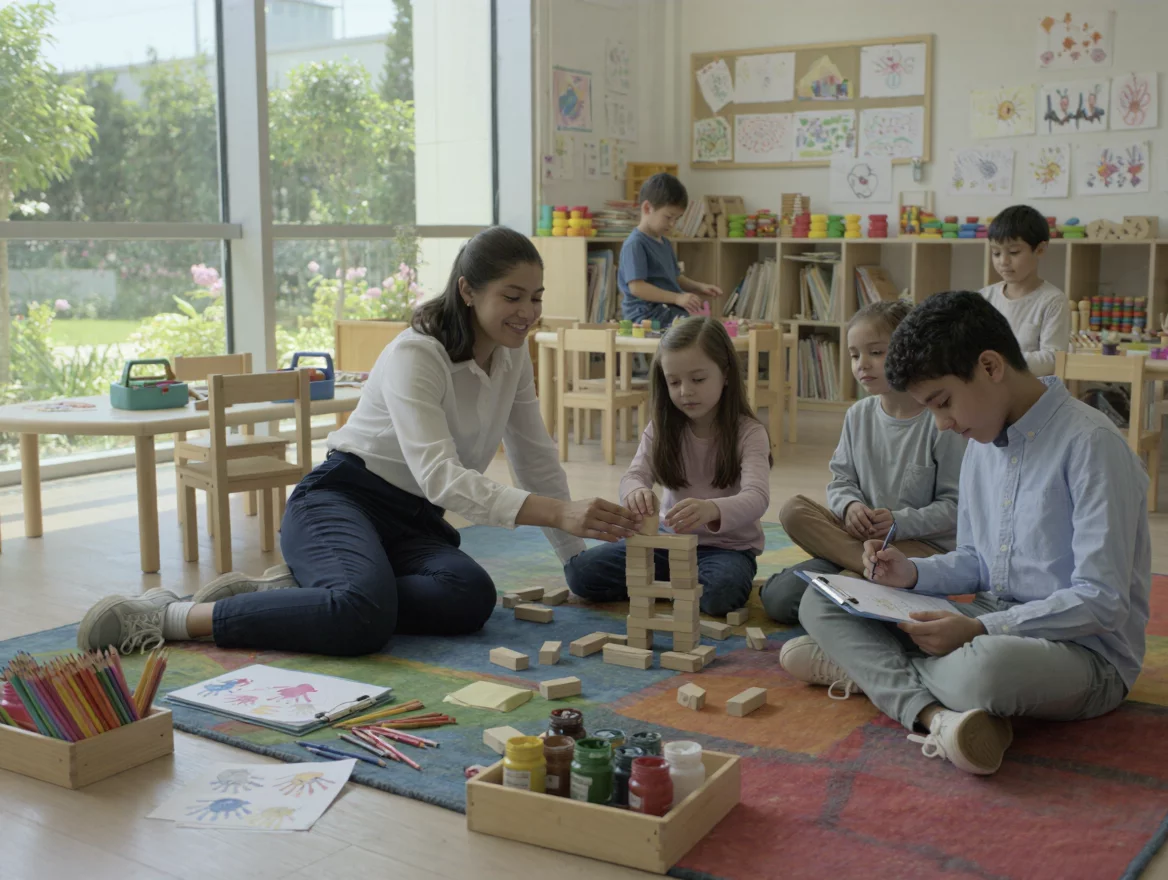
Child Development and Education Programs in Turkey
What is the Department of Child Development and Education in Turkey? The Department of Child Development and Education is an undergraduate program that examines the physical, mental, emotional and social development of children between the ages of 0-18 and trains specialists to meet their education, care and guidance needs. This department is not only limited…
What is the Department of Child Development and Education in Turkey?
The Department of Child Development and Education is an undergraduate program that examines the physical, mental, emotional and social development of children between the ages of 0-18 and trains specialists to meet their education, care and guidance needs. This department is not only limited to education; it is also directly related to fields such as psychology, health, special education, etc.
In Turkey, this program is usually offered as a 4-year undergraduate program. Some universities offer this department under the name “Child Development”, while others offer it under the name “Child Development and Education”. The curriculum includes multifaceted courses such as developmental psychology, child health, play therapy, special education and early childhood education.
English programs are still limited, but many private universities offer 100% or 30% English options. In public universities, education is generally in Turkish, but English preparation is also possible depending on the university.
The goal of international students who choose this department is usually twofold:
- Working directly with children as an educator or development specialist,
- Pursuing an academic or applied career in early childhood.
Which Universities Have Child Development Programs?
There are many universities across Turkey that offer child development education. Both state and foundation universities offer this program. However, some universities stand out more in this field; they make a difference with their academic staff and application opportunities.
Here are some universities that are strong in this area:
Hacettepe University (Ankara): One of the pioneers of child development in Turkey. It is known for its development laboratories and hospital internship opportunities. Its graduates are also recognized abroad.
Ankara University: A well-established public university that attracts attention with its psychology-based course content and academic discipline.
Istanbul University – Cerrahpaşa: Located within the Faculty of Health Sciences, the program stands out with both theoretical and clinical applications.
Istanbul Medipol University: caters to international students with a 100% English program option. There are modern laboratories and active Erasmus collaborations.
Üsküdar University: is known for its academic staff specialized in psychology and child development. It provides field experience with practice schools and therapy centers.
Izmir Katip Çelebi University: Newly established but rapidly developing, it offers an application-oriented program.
You can also view the official program details on the YÖK Atlas platform.
Advantages of Studying Child Development in Turkey
There are many advantages to studying this program in Turkey. The fact that early childhood education and development support programs are both academically and practically advanced makes Turkey attractive for international students. Here are some of the highlights:
1. Wide Application Area
In Turkey, child development education is not only theoretical. Many universities cooperate with hospitals, rehabilitation centers, nurseries and special education institutions. This allows students to gain experience in the real field before they graduate.
2. Appropriate Education and Living Costs
Turkey offers very affordable living and learning compared to the quality of education. Annual tuition fees are very low at public universities. Foundation universities offer scholarships from 25% to 100% for international students.
3. Multicultural Experience
Thanks to Turkey’s geographical location, many students from Europe, the Middle East, Africa and Asia meet here. In a human-oriented field like child development, working with students from different cultures is a big plus.
4. Comprehensive Roadmap for Academic and Career Development
Graduates of this department have the opportunity to pursue academic careers not only in kindergartens but also in hospitals, rehabilitation centers, NGOs, institutions affiliated to the Ministry of Family and Social Policies, and even universities.
Is the Child Development Diploma from Turkey Recognized Abroad?
This question is on the minds of many international students considering coming to Turkey: “If I graduate from here, will my diploma be valid when I return to my home country?” Short answer: Yes, but there are some details.
Diplomas from universities in Turkey usually have strong academic validity as they are recognized by the Higher Education Council (YÖK). However, the recognition of your diploma abroad depends on the equivalence system of the country you are going to. I suggest you take a look at the ENIC-NARIC system for diploma recognition, especially for European countries.
For example:
- European countries, especially those that are party to the Bologna Process (such as Germany, Italy, France), largely recognize undergraduate programs in Turkey.
- Middle East and North African countries recognize child development and education diplomas from Turkey as valid in public institutions. Many graduates of these programs are working in countries such as Qatar, Jordan and Morocco.
- In countries such as the United States and Canada, additional certification or equivalency exams may be required, even if the diploma is valid.
To increase the international validity of your diploma, you should pay attention to the following:
- Prefer a 100% English program
- Participate in Erasmus or exchange programs
- Check whether the university has international accreditations
In Which Fields Can Graduates Work?
The job field for child development graduates is much wider than you think. This department does not only train teachers; it also prepares you for a career as a specialist, a counselor and a health promoter. Here are some areas where you can work after graduation:
1. Early Childhood Education Institutions
You can work as a “child development specialist” or “teacher” in kindergartens, nurseries and pre-schools. These positions are quite common not only in the public but also in the private sector.
2. Health Institutions and Rehabilitation Centers
You can work in hospitals, especially in departments that monitor development in children’s hospitals. Rehabilitation centers also have the opportunity to work with children with special needs.
3. Social Work and NGOs
Child welfare institutions, love homes, counseling centers and non-governmental organizations affiliated to the Ministry of Family and Social Services create a great employment area for child development graduates.
4. Special Education and Counseling
You can also work in special education centers, consulting firms or by opening your own individual development center. You can make a difference with additional certificates by specializing in areas such as play therapy and sensory integration.
5. Academic Career
If you want to stay in the academic world, you can apply for master’s and doctoral programs and pursue a career as a research assistant or lecturer at universities.
In summary, child development graduates can work not only in education but also in many other sectors such as health, social work and psychological support.
Differences Between Child Development and Preschool Teaching
These two sections are often confused because they both deal with younger age groups. But in fact, there are serious differences in terms of their goals and content. It is very important to know these differences when deciding which department to choose.
1. Purpose of Education
- Child Development: Focuses on a broader perspective of development. In other words, it deals not only with education but also with psychological, social, cognitive and motor development in a holistic manner.
- Preschool Teaching: It aims to plan and implement educational activities for children aged 3-6 years.
2. Post-Graduation Title
- Child Development graduates are defined as “child development specialist”
- Pre-school graduates receive the title of “kindergarten teacher” and work directly as classroom teachers.
3. Workspace
- Child development specialists can work not only in schools but also in a much wider range of settings such as hospitals, NGOs, the Ministry of Family Affairs, etc.
- Pre-school teachers work mostly in nurseries and kindergartens.
If you want a more practical and education-oriented path, preschool teaching, if you want a more development, guidance and social work-oriented path, child development department may be more suitable for you.
Is it possible to study child development with distance education?
This question is frequently asked, especially by working students or those who want to study without coming to Turkey. Answer: Yes, some universities in Turkey offer child development programs through open education or distance education. But this option has some advantages and limitations.
Advantages:
- Access to courses without time and space limitations
- An ideal program for working students
- Lower training costs
- Possibility to get a diploma without coming to Turkey
Limitations:
- Limited experience in practical courses
- Some employers may prefer face-to-face training
- Internship opportunities may be limited
- Social interaction and campus experience may be lacking
Anadolu University has the best-known open education program in child development in Turkey. However, this program is mostly in Turkish and has limited recognition in some countries.
Therefore, it is very important for international students considering distance education to investigate the validity of the diploma in their own country.
Application and Admission Process for International Students
The application process for child development programs in Turkey is usually quite straightforward, but each university may have a different document and timetable system.
If you want to learn step-by-step about the required documents, visa process and scholarship applications, check out Road to Study’s application guide.
Life and Student Experience in Turkey
Studying in Turkey is not only about going to university, but also about experiencing a whole new culture. Especially while studying in a social and people-oriented department such as child development, meeting different cultures significantly improves communication skills and empathy.
Everyday Life
There are many accommodation options such as dormitories, private apartments and student houses. In big cities like Istanbul, the cost of living can be a bit higher, but government-subsidized dormitories and student cards make it possible to control costs. With the student card, you get serious discounts on public transportation. Food, transportation and social life are quite affordable compared to Europe.
Cultural Wealth
Turkey is a country where both eastern and western cultures intersect, fascinating with its history and cuisine. Especially in cities like Istanbul, Izmir and Ankara, there are countless social events, festivals and cultural events for students.
Moreover, while studying child development, working with children from different regions, observing cultural differences and developing an appropriate approach will give you valuable field experience.
What Should You Do Now?
If you want to contribute to the development of children, take care of them more consciously and professionally, and do it on an international level, studying child development in Turkey can be a great start for you.
Studying this field in Turkey will put you a few steps ahead with academic quality, affordable prices, cultural diversity and strong job opportunities.