
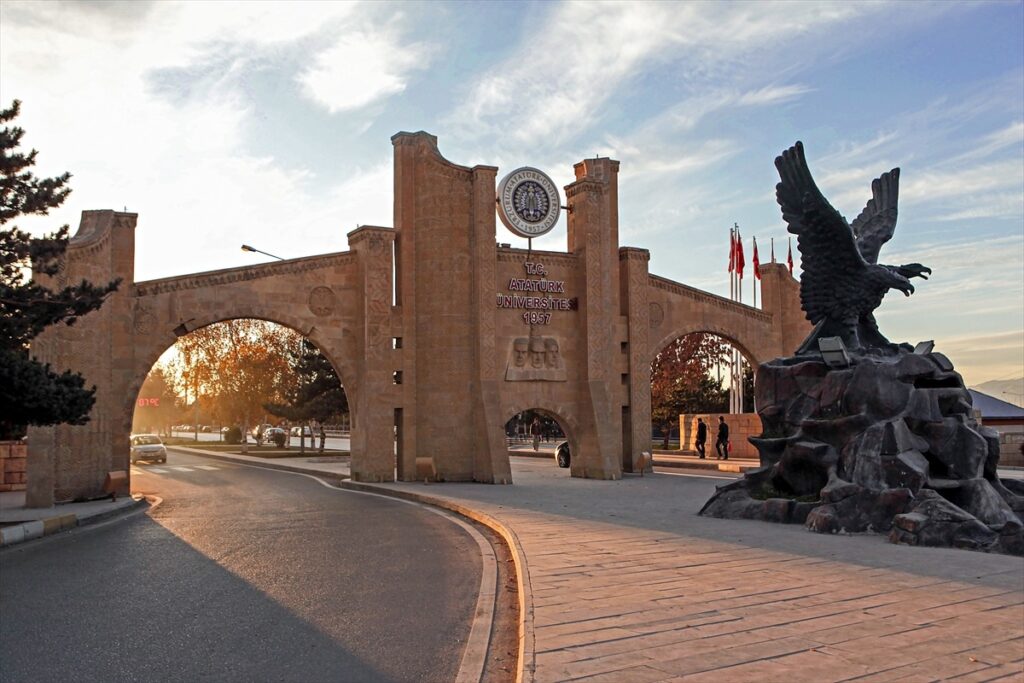
History and Vision
Atatürk University was established on June 7, 1957, by Law No. 6990 in Erzurum. Founded in line with Mustafa Kemal Atatürk’s vision to become the educational hub of Eastern Anatolia, the university began its academic life in 1958 with the Faculties of Agriculture and Science-Letters. As one of Turkey’s most established universities, it has expanded to 23 faculties. Under the leadership of Rector Prof. Dr. Ömer Çomaklı, Atatürk University moves forward with the motto “A Future Enlightened by Science.” Its vision is to become a leading research university at national and international levels, and its mission is to train critical thinkers who contribute to society. With nearly 80,000 students (YÖK Atlas, 2022–2023), the university ranked in the 801–1000 band in the Times Higher Education 2025 rankings. Atatürk University plays a pioneering role in the scientific and cultural development of the region.
Education
Atatürk University offers a wide academic spectrum through its 23 faculties, including Medicine, Dentistry, Pharmacy, Agriculture, Science, Literature, Economics and Administrative Sciences, Engineering, Theology, Communication, Education, Fine Arts, Law, Health Sciences, Sports Sciences, Veterinary Medicine, Tourism, Nursing, Aquaculture, Architecture and Design, Applied Sciences, Open Education, and Kazım Karabekir Education. In total, it provides over 140 undergraduate and more than 200 graduate programs. The faculties of Medicine, Engineering, and Agriculture stand out. With around 3,000 academic staff, the faculty comprises expert educators. The education model blends theoretical and practical learning, and some programs are offered in English. Over 120 laboratories and 20 research centers (such as the Eastern Anatolia Observatory) enhance practical training. Atatürk University is active in TÜBİTAK projects and is known for its scientific productivity. For more details, please visit the university’s official website.
Campus and Technological Infrastructure
The main campus of Atatürk University spans 6.5 million m² in Erzurum. Additional campuses are located in Yakutiye and Palandöken. With over 100 buildings covering a closed area of 400,000 m², the campus features modern architecture. High-speed internet and smart classrooms form the foundation of its technological infrastructure. The Central Library holds more than 500,000 printed materials and provides access to over 1 million digital resources, with seating for more than 2,000 users. Research facilities include advanced laboratories in astrophysics and agriculture, supporting strong scientific infrastructure.
Accommodation
Atatürk University offers student housing in collaboration with the Credit and Dormitories Institution (KYK). Dormitories near the campus serve over 10,000 students. Rooms accommodate 2 to 6 students and include beds, wardrobes, desks, and internet access. Facilities such as laundries, kitchens, and study rooms are available. Security is ensured with 24/7 surveillance cameras, and regular cleaning is provided. On-site canteens meet basic needs. Applications are made via KYK’s online system, with incentives available for scholarship students. The proximity of the dormitories to the campus offers convenience.
Social Life
Atatürk University offers a vibrant social environment. Green areas, walking paths, and rest spots on campus provide a peaceful atmosphere. Sports facilities include a ski center, basketball courts, and fitness halls. University teams are successful in various tournaments. Dining halls offer daily meals; vegan options are limited but available upon request. With over 70 student clubs (e.g., Ata Winter Sports Club), the campus hosts conferences, exhibitions, and festivals. The “Atatürk University Spring Festival” brings the campus to life with concerts and cultural events. Erzurum’s historical and natural attractions enrich social life. Special activities are also held for international students.
International students can visit the Road to Study platform for more information about university life in Turkey.
Cultural Integration for International Students
Atatürk University hosts more than 2,500 international students from over 50 countries. The International Relations Office offers orientation programs and ongoing support. Turkish language courses are provided by TOMER from A1 to C1 levels to support integration. Through Erasmus+ and Mevlana programs, the university collaborates with over 250 institutions. Events like “International Culture Day” promote cultural interaction. A mentorship system helps newcomers integrate into campus life. Turkey’s cultural heritage offers a unique experience for international students.
Health Services and Security
Atatürk University provides basic healthcare through its on-campus Health Center. Medical examinations and emergency services are available on weekdays, and ambulance service operates 24/7. The Faculty of Medicine Hospital is one of the region’s leading medical centers for serious conditions. Psychological counseling services are available through individual therapy sessions, which can be booked online. Campus security is ensured with 24/7 camera surveillance and staff; all entry and exit points are monitored. Fire drills are conducted regularly.
Transportation
The main campus is 5 km from Erzurum city center and is accessible via public buses and minibuses. Free shuttle services operate within the campus based on class schedules. Bicycle lanes and parking areas are also available. The campus is 15 km from Erzurum Airport, and public transportation can be used at discounted rates with the ErzurumKart. Access to the city center is easy and convenient.
Student Support Services
Atatürk University provides career support through its Career Center, which organizes internships and job fairs like “Career Days.” Academic advisors help with course selection and career planning. The Psychological Support Unit offers free therapy services to support mental health. The Office for Students with Disabilities provides accessibility and exam accommodations. The Scholarship Coordination Office manages both government and foundation scholarships. Mentorship programs support new students in their transition.